Launch offer — valid today only

📄 Digital book in PDF · read it on your phone or print it

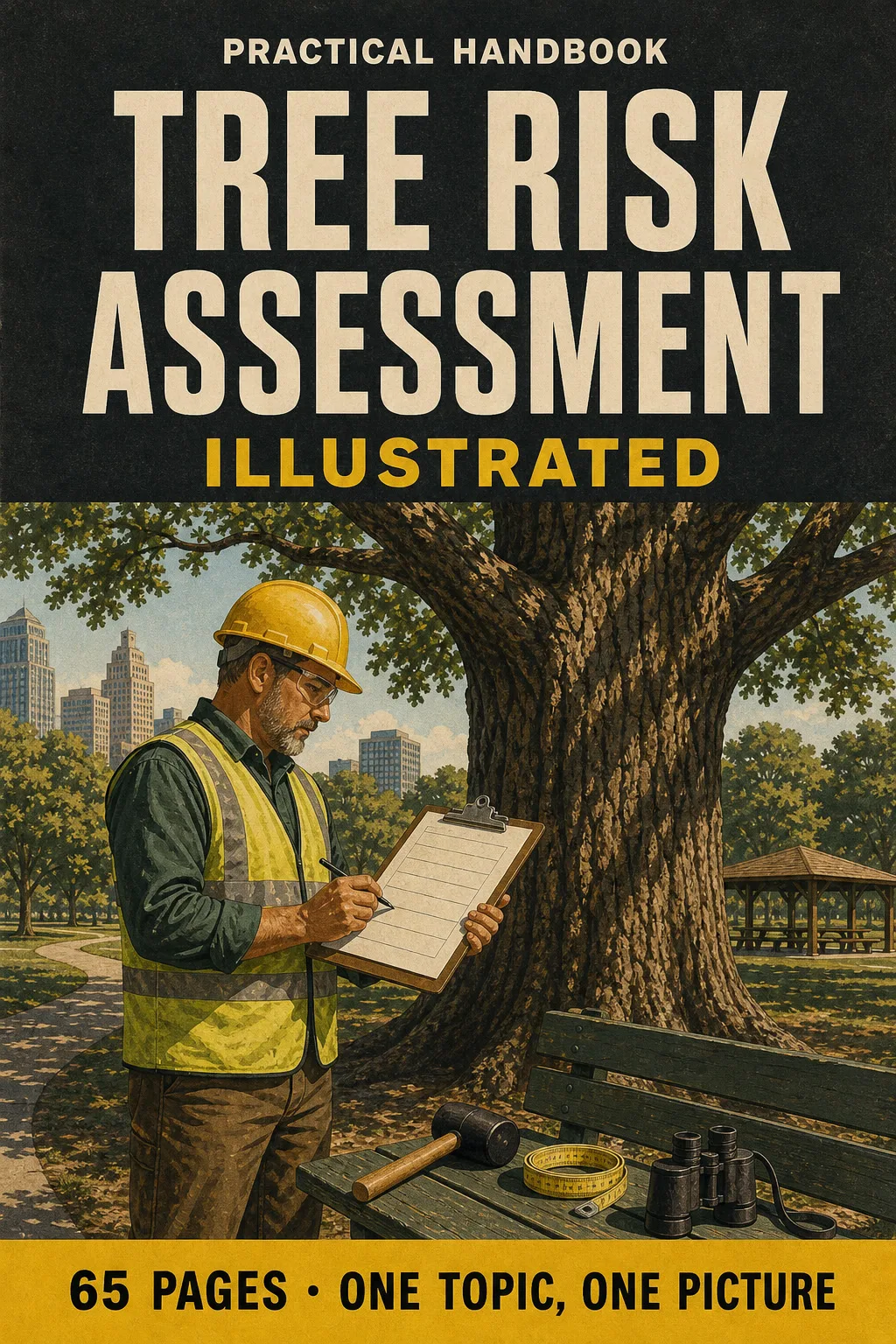
Tree Risk Assessment, Illustrated: A Study Guide for the TRAQ Course The Same Nine Steps on Every Tree

From targets to the written report, in the same nine steps: the target zone, the walk-around, likelihood of failure and impact, both matrices and mitigation. One topic per page: first the drawing, then what you need to remember. 65 illustrated pages.

GET TREE RISK ASSESSMENT ILLUSTRATED

🔒 Secure checkout · PDF by email · 30-day guarantee

Every topic, its own pageEach defect, rating and step drawn, with the explanation right beside it
65 illustrated pages9 parts, from risk vs. defect to the blank practice report sheet
Up-to-date sourcesANSI A300 Part 9 and the tree risk assessment BMP (current edition)
PDF by emailFormat

Look Inside the Book

Every page has one big drawing and a box with the ratings, numbers and steps you need to know:

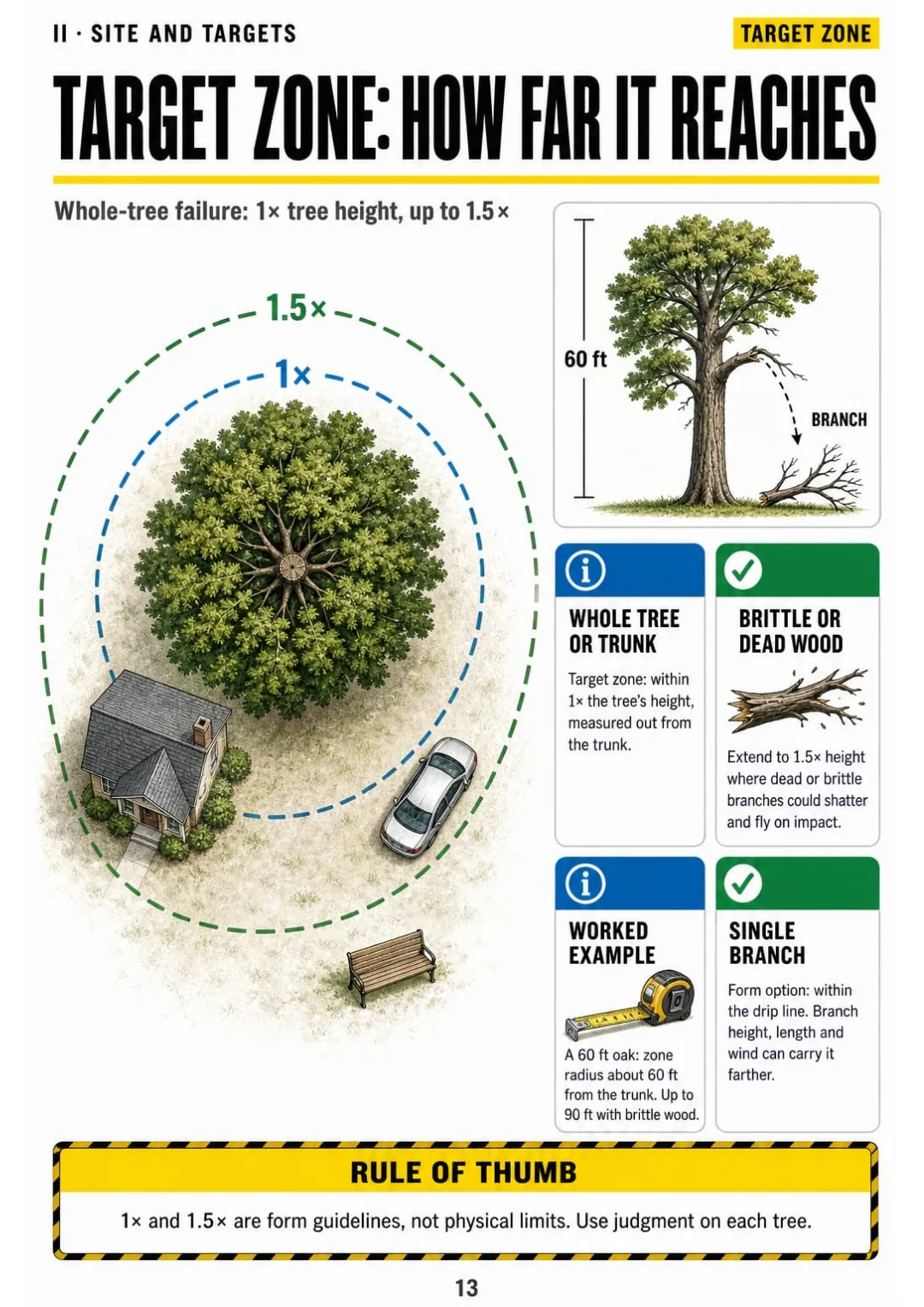
Target zone: 1× tree height, 1.5× with brittle wood. A 60 ft oak = 60-90 ft
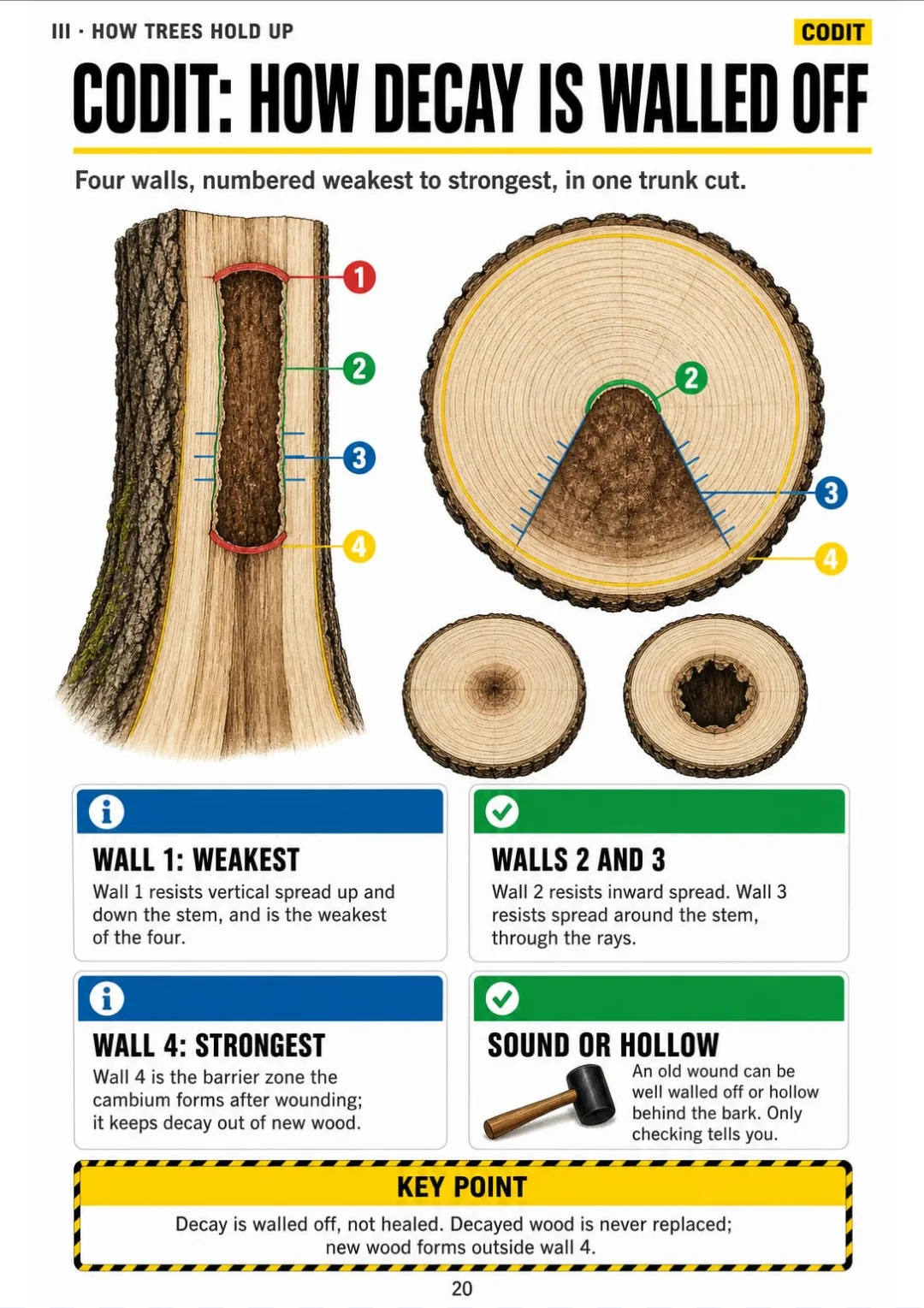
CODIT walls 1–4: wall 1 is weakest, wall 4 (barrier zone) is strongest.
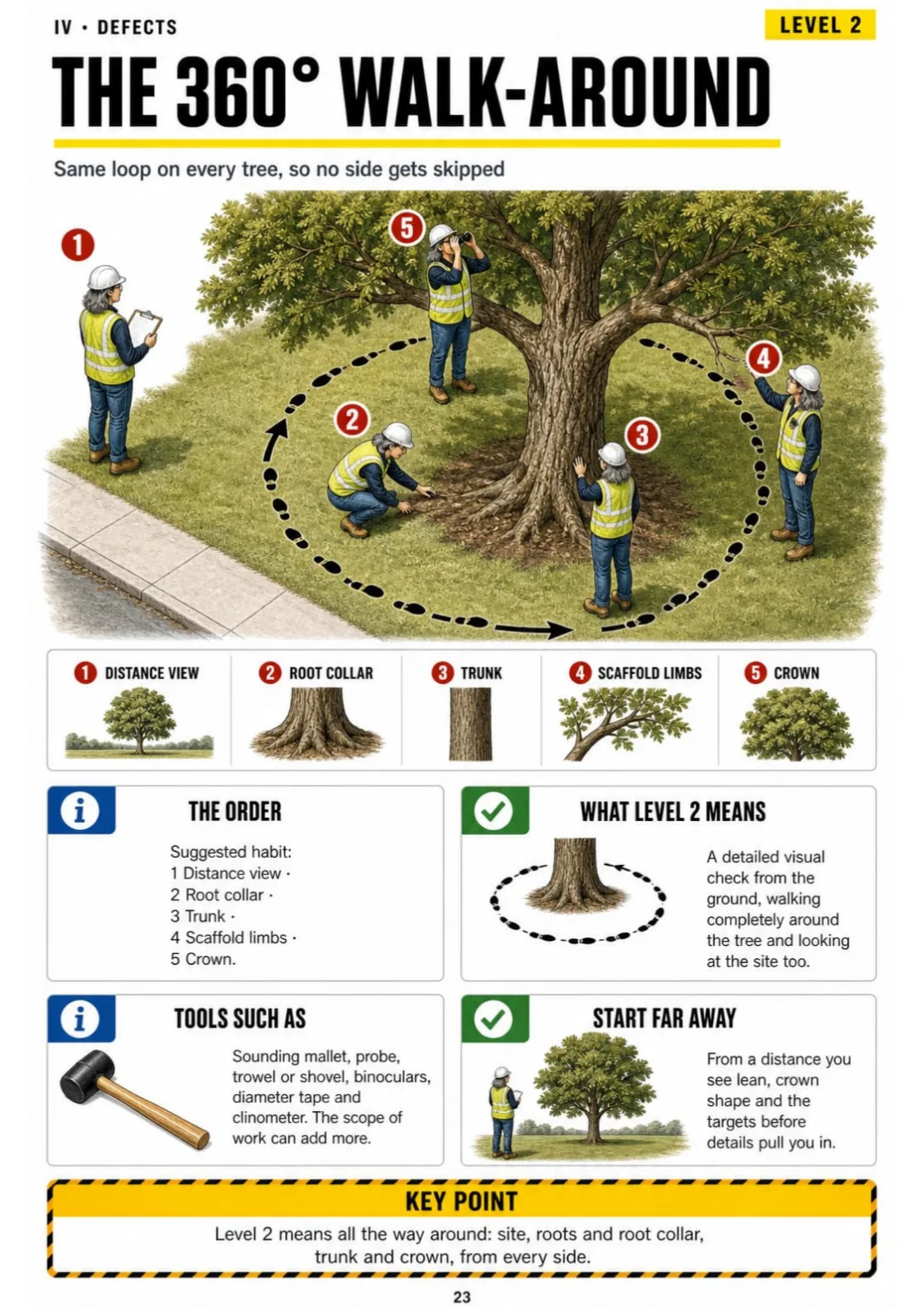
Level 2: a full 360° loop in 5 stops, from distance view to crown.
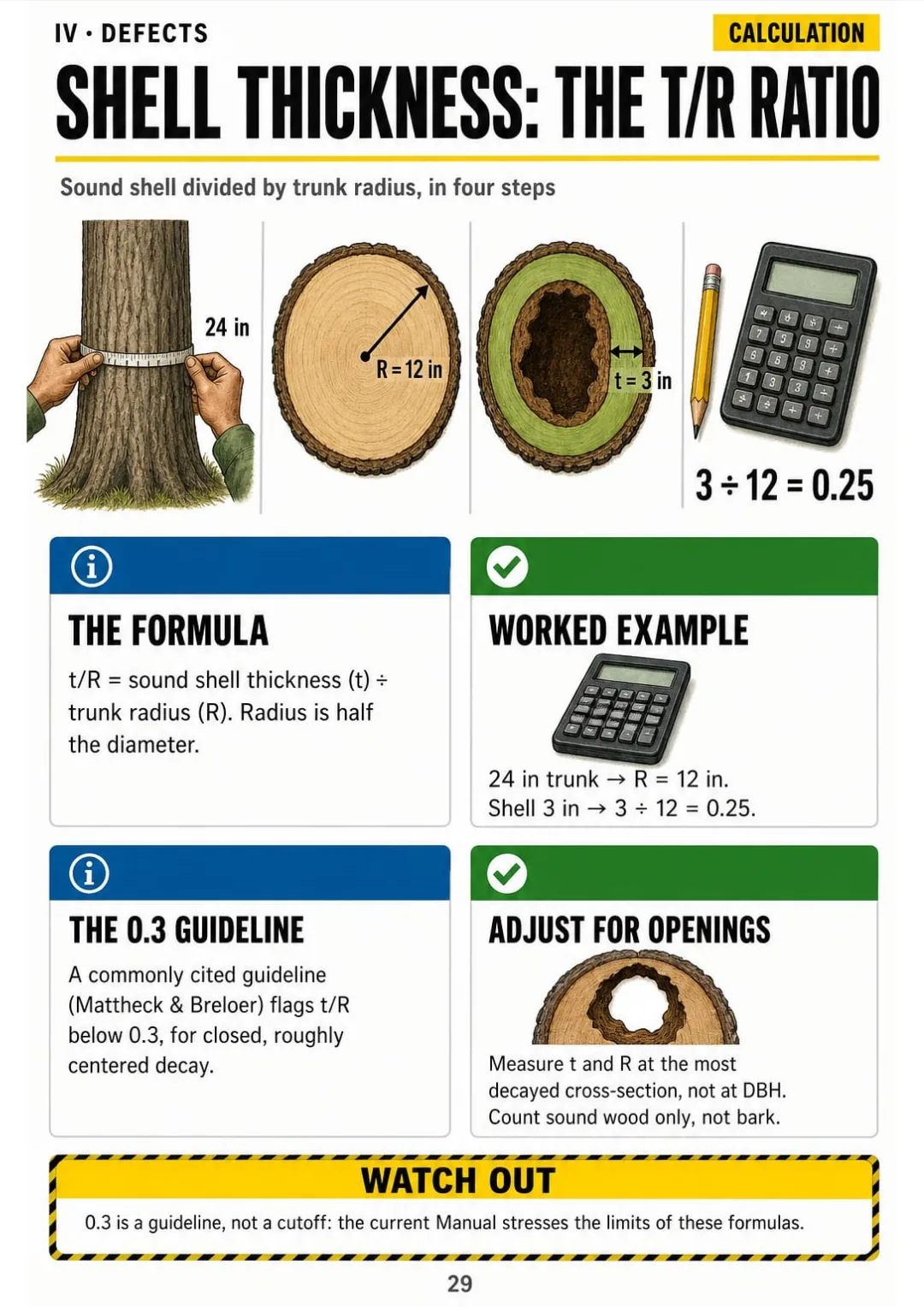
Worked example: 24 in trunk, 3 in shell → t/R = 0.25.
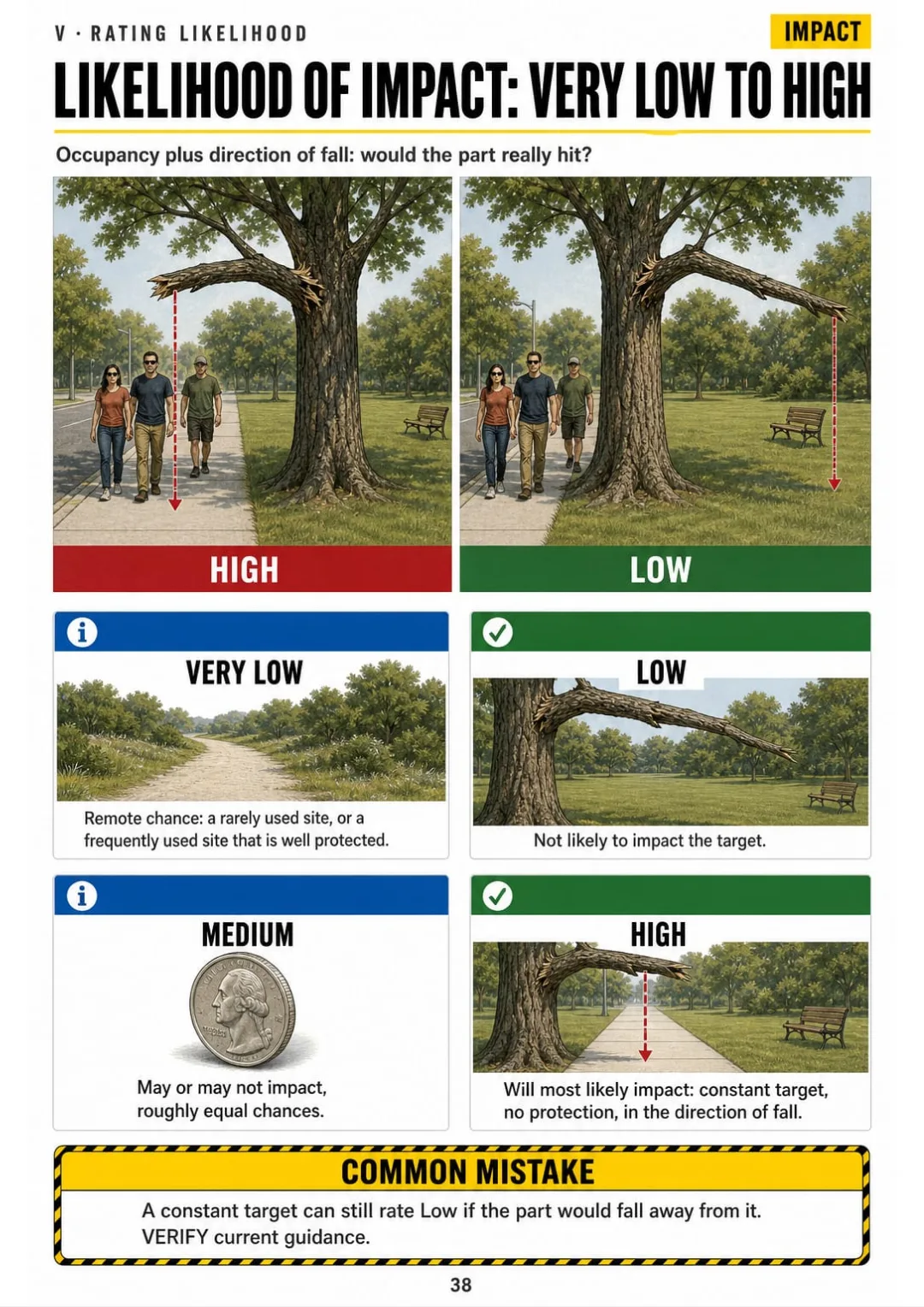
Same busy sidewalk, same limb: High one way, Low the other.
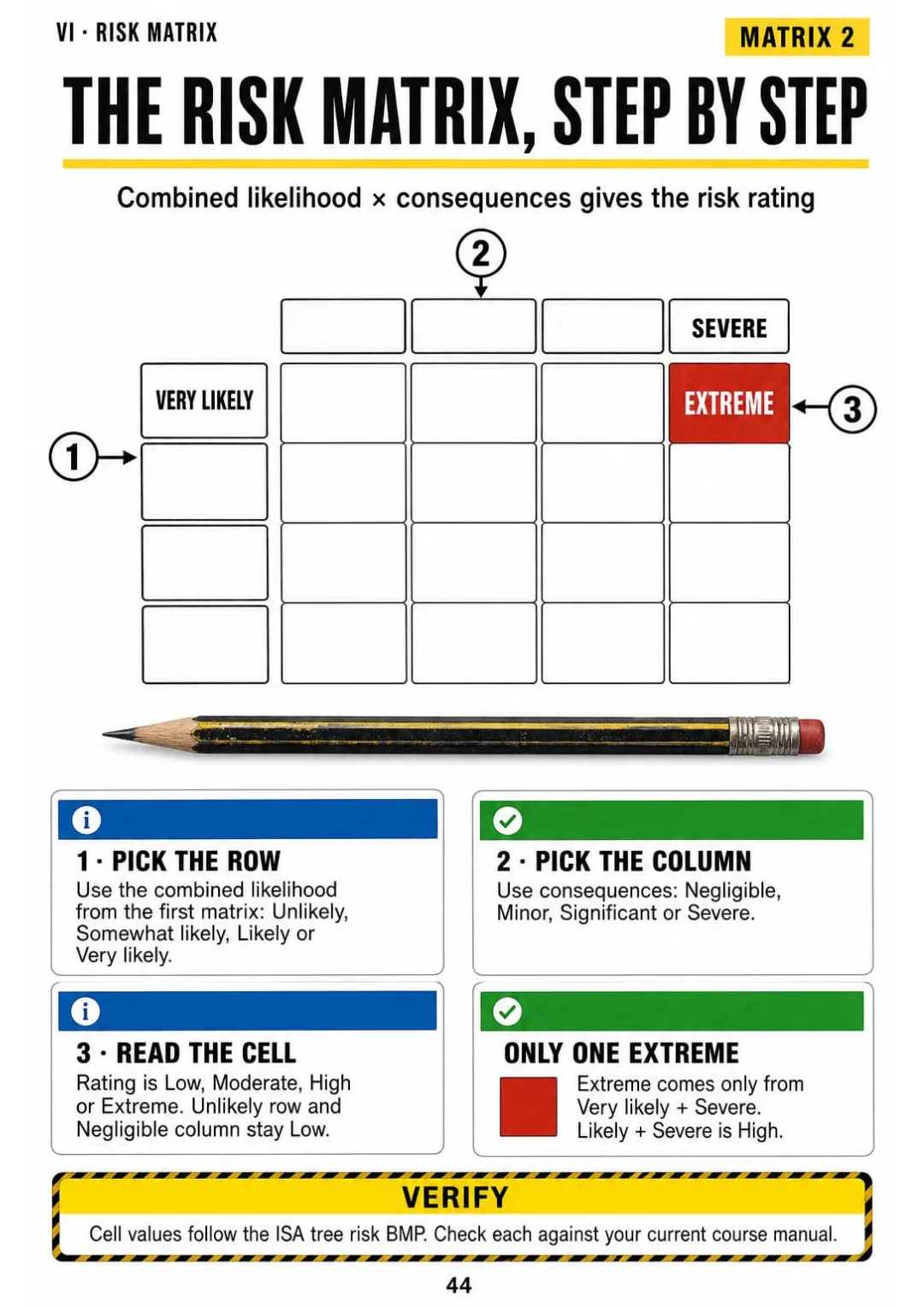
Blank risk matrix to complete: four rows of likelihood, four columns of consequences
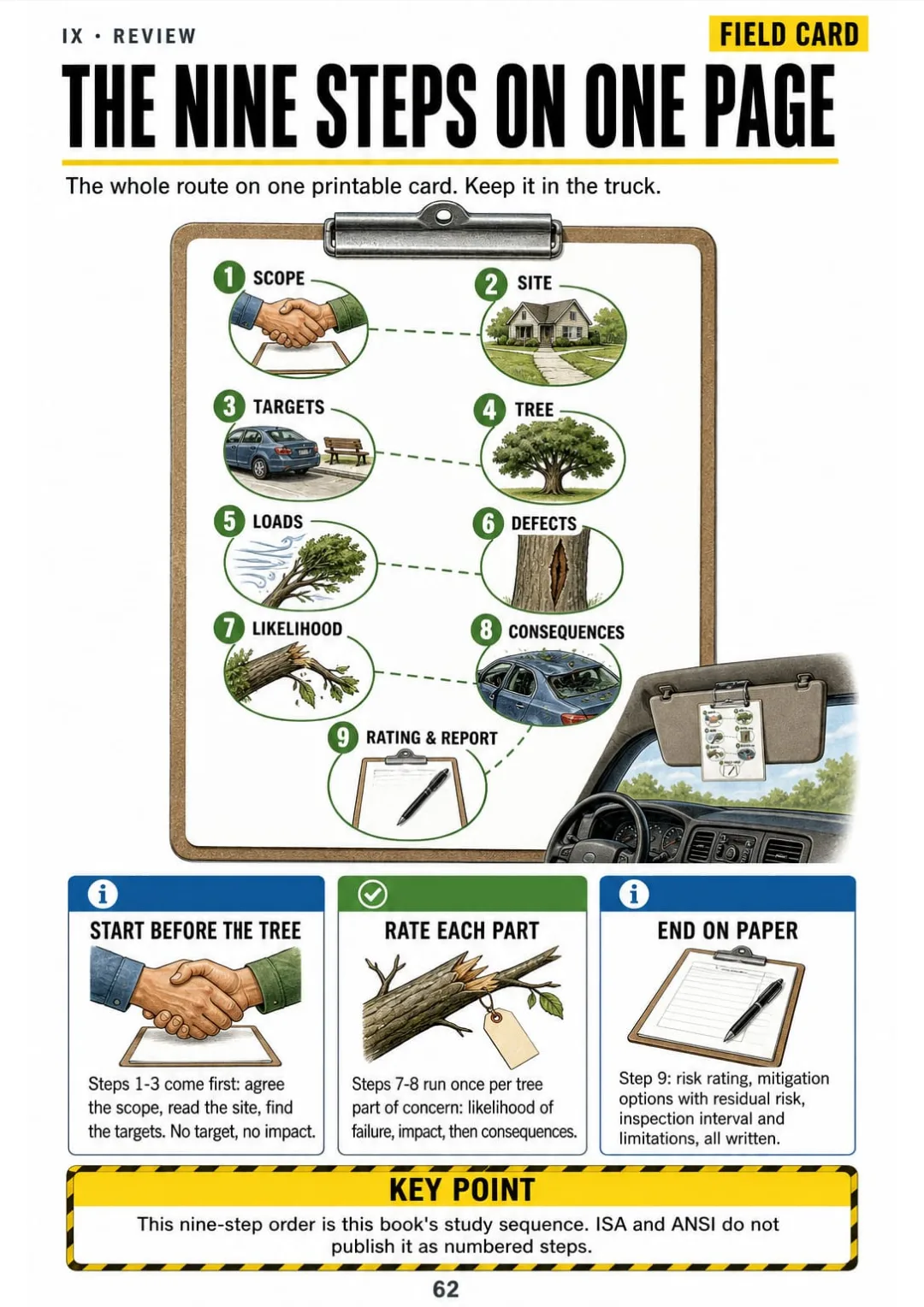
Scope → site → targets → tree → loads → defects → likelihood → consequences → rating and report.
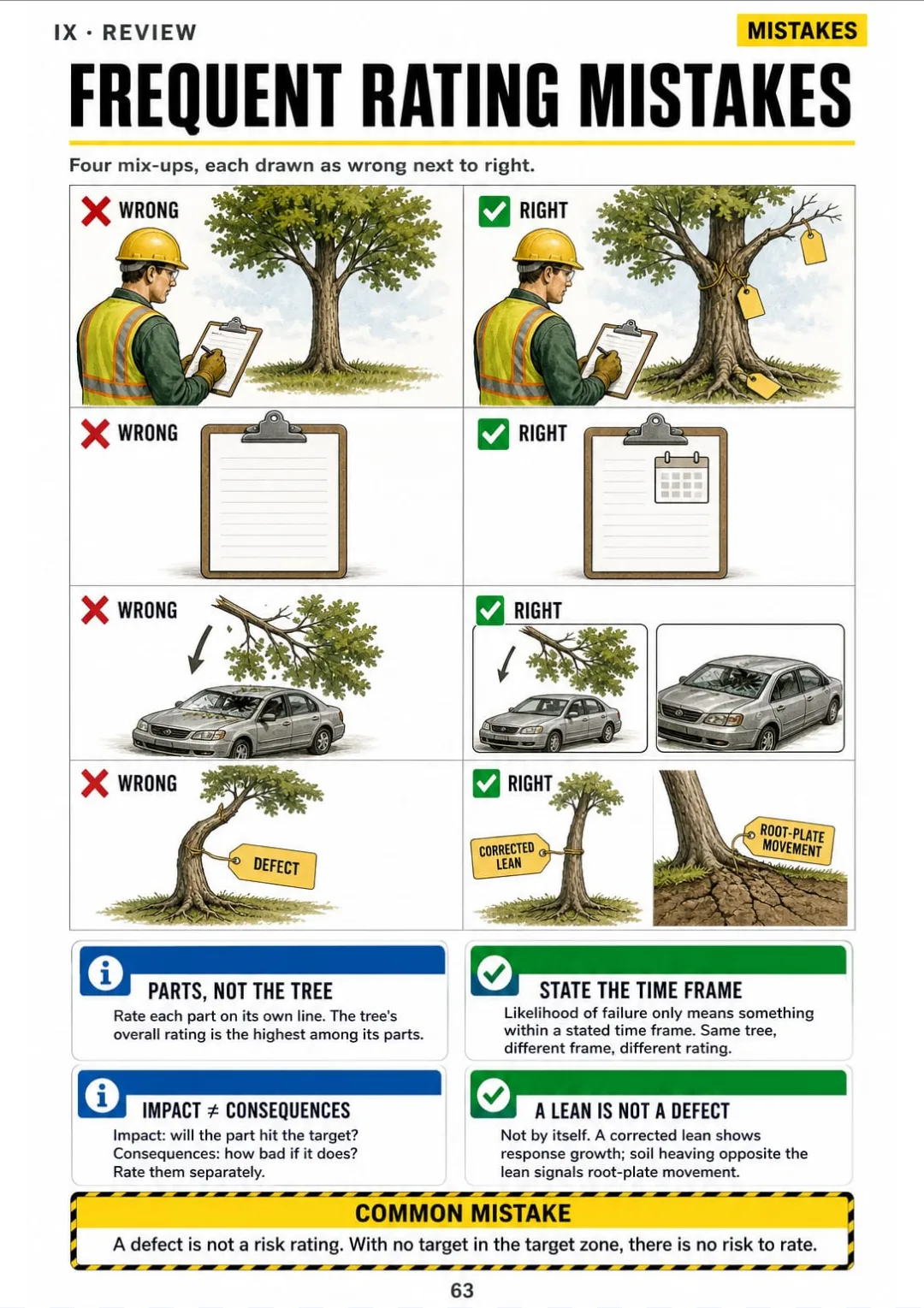
Rate parts, state the time frame, separate impact from consequences, read the lean.

Swipe to see more →

These are real pages from the book. The table of contents is the full one: 9 parts and 61 topics.

The Problem Isn't You. It's How It Was Explained to You.

You're standing at the base of a big silver maple for the field exercise, clipboard in hand, and you're not sure where to start the loop.

In the manual, the Level 2 walk-around comes as paragraphs: distance view, then closer in, root collar, trunk, crown. Read as text, the order falls apart the moment you're outside.

Level 2: a full 360° loop in 5 stops, from distance view to crown.

In the book, the walk-around is one page: a full 360° loop drawn from above, with five numbered stops, from the distance view to the crown, and what to look for at each stop.

The same goes for the target zone, CODIT, the t/R ratio, likelihood of impact and the risk matrix: each one has its own page.

You walk every tree in the same five stops, and you do it without going back to the manual.

COMPARE FOR YOURSELF

The Same Topic, Two Ways to Study It

THIS
  • The manual: line after line
  • CODIT and decay explained only in words
  • You show up to the field exam with doubts
Compartmentalization of decay in trees (CODIT) describes the response of the tree to wounding through the formation of boundaries that resist the spread of discoloration and decay. Wall 1 resists vertical spread through the plugging of vascular elements and is the weakest. Wall 2 resists inward radial spread by means of the latewood of growth rings. Wall 3 resists tangential spread through ray parenchyma. Wall 4, the barrier zone, is formed by the cambium after wounding and constitutes the strongest boundary, separating wood present at the time of injury from wood formed subsequently.
FOR THIS
  • CODIT's four walls in one drawing
  • Which wall is weakest and strongest, in one box
  • You see it and you get it
CODIT walls 1–4: wall 1 is weakest, wall 4 (barrier zone) is strongest.
CONTENTS

Take a Look at the 9 Parts and 61 Topics

The big picture, site and targets, how trees hold up, defects from root to crown, rating likelihood, consequences and the risk matrix, mitigation, the written report, and review and field practice: 65 pages, all illustrated.

IThe Big Picture · pp. 5-10
  1. Risk Is Not the Same as a Defect
  2. The Nine-Step Order You Will Use on Every Tree
  3. Three Levels of Assessment
  4. Scope of Work Comes Before the Tree
  5. The Timeframe Changes the Rating
  6. Words That Have a Fixed Meaning
IISite and Targets · pp. 11-16
  1. Reading the Site in Two Minutes
  2. What Counts as a Target
  3. The Target Zone: How Far a Tree Can Reach
  4. Occupancy Rate: Rare, Occasional, Frequent, Constant
  5. Moving the Target Instead of the Tree
  6. Utilities and Special Targets
IIIHow Trees Hold Up · pp. 17-22
  1. Loads: Gravity, Wind, Ice and Snow
  2. The Lever Arm: Why Long Limbs Fail
  3. Reaction Wood and Response Growth
  4. Compartmentalization: How Decay Is Walled Off
  5. Species Matters
  6. Tree Health vs. Tree Structure
IVDefects, Root to Crown · pp. 23-35
  1. The 360° Walk-Around
  2. Root Collar and Buried Flare
  3. Root Damage and Severed Roots
  4. Soil Heaving and Leaning Trees
  5. Trunk Cracks
  6. Cavities and Hollows
  7. Measuring Shell Thickness: The t/R Ratio
  8. Strength Loss Formula
  9. Codominant Stems and Included Bark
  10. Branch Attachments and Overextended Limbs
  11. Dead Wood and Hangers
  12. Decay Signs and Fungal Fruiting Bodies
  13. Advanced Tools: When Level 2 Is Not Enough
VRating Likelihood · pp. 36-41
  1. Likelihood of Failure: Four Categories
  2. Imminent Means Act Now
  3. Likelihood of Impact: Very Low to High
  4. Protection Factors
  5. Combining Failure and Impact
  6. Rating Each Tree Part Separately
VIConsequences and the Risk Matrix · pp. 42-48
  1. Consequences: Negligible, Minor, Significant, Severe
  2. Size of Part and Fall Distance
  3. The Risk Matrix: Low, Moderate, High, Extreme
  4. Worked Case 1: Dead Limb Over a Driveway
  5. Worked Case 2: Codominant Oak Over a House
  6. Worked Case 3: Leaning Tree After Trenching
  7. When Two Assessors Disagree
VIIMitigation · pp. 49-55
  1. Mitigation Options: From Least to Most
  2. Residual Risk: The Rating After the Work
  3. Pruning to Reduce Risk
  4. Supplemental Support Systems
  5. Retrenchment and Retaining Old Trees
  6. Inspection Frequency
  7. Risk Tolerance Is the Client's Decision
VIIIThe Written Report · pp. 56-61
  1. What Goes in a Tree Risk Report
  2. Filling the Basic Assessment Form
  3. Writing Observations, Not Opinions
  4. Photos and Sketches That Support the Report
  5. Limitations and Disclaimers
  6. Explaining the Rating to a Client
IXReview and Field Practice · pp. 62-65
  1. The Nine Steps on One Page
  2. Frequent Rating Mistakes
  3. Field Exam Walk-Through
  4. Blank Practice Report Sheet

One Page, One Topic, All Clear

Think of it this way:

A homeowner walks you to the oak over the garage and asks if it's coming down. You need a rating you can explain and put in writing.

You open the book to the matrix pages and see both tables drawn: likelihood of failure crossed with likelihood of impact, then that result crossed with consequences, with a worked case filled in next to a blank one.

Same busy sidewalk, same limb: High one way, Low the other.

Same with the target zone, the t/R ratio, CODIT, included bark and residual risk: each one on its own page.

Tree Risk Assessment Illustrated is 9 parts and 61 topics, all drawn, and it closes with the nine steps on one page, a field exam walk-through and a blank practice report sheet.

What you see drawn, you don't have to memorize.

What's Inside Tree Risk Assessment Illustrated:

Ipp. 5-10

The Big Picture

Why risk is not the same as a defect, the nine-step order, the three levels of assessment, scope of work, the time frame and the words with a fixed meaning.

IIpp. 11-16

Site and Targets

Reading the site, what counts as a target, the target zone, occupancy from rare to constant, moving the target and utilities.

IIIpp. 17-22

How Trees Hold Up

Gravity, wind, ice and snow loads, the lever arm, reaction wood, CODIT, species differences and health vs. structure.

IVpp. 23-35

Defects, Root to Crown

The 360° walk-around, root collar, severed roots, soil heaving, cracks, cavities, the t/R ratio, strength loss, included bark, overextended limbs, hangers, decay fungi and advanced tools.

Vpp. 36-41

Rating Likelihood

Likelihood of failure in four categories, what imminent means, likelihood of impact, protection factors, combining both and rating each part separately.

VIpp. 42-48

Consequences and the Risk Matrix

Consequences from negligible to severe, size of part and fall distance, the risk matrix and three worked cases in feet, inches and pounds, plus when two assessors disagree.

VIIpp. 49-55

Mitigation

Mitigation options from least to most, residual risk, pruning, support systems, retrenchment, inspection frequency and the client's risk tolerance.

VIIIpp. 56-61

The Written Report

What goes in the report, the basic assessment form, observations vs. opinions, photos and sketches, limitations and explaining the rating to a client.

IXpp. 62-65

Review and Field Practice

The nine steps on one page, frequent rating mistakes, a field exam walk-through and a blank practice report sheet.

At the end of the book: Three worked risk cases, the nine steps on one page, a field exam walk-through and a blank practice report sheet.
Plus: 2 Free Books

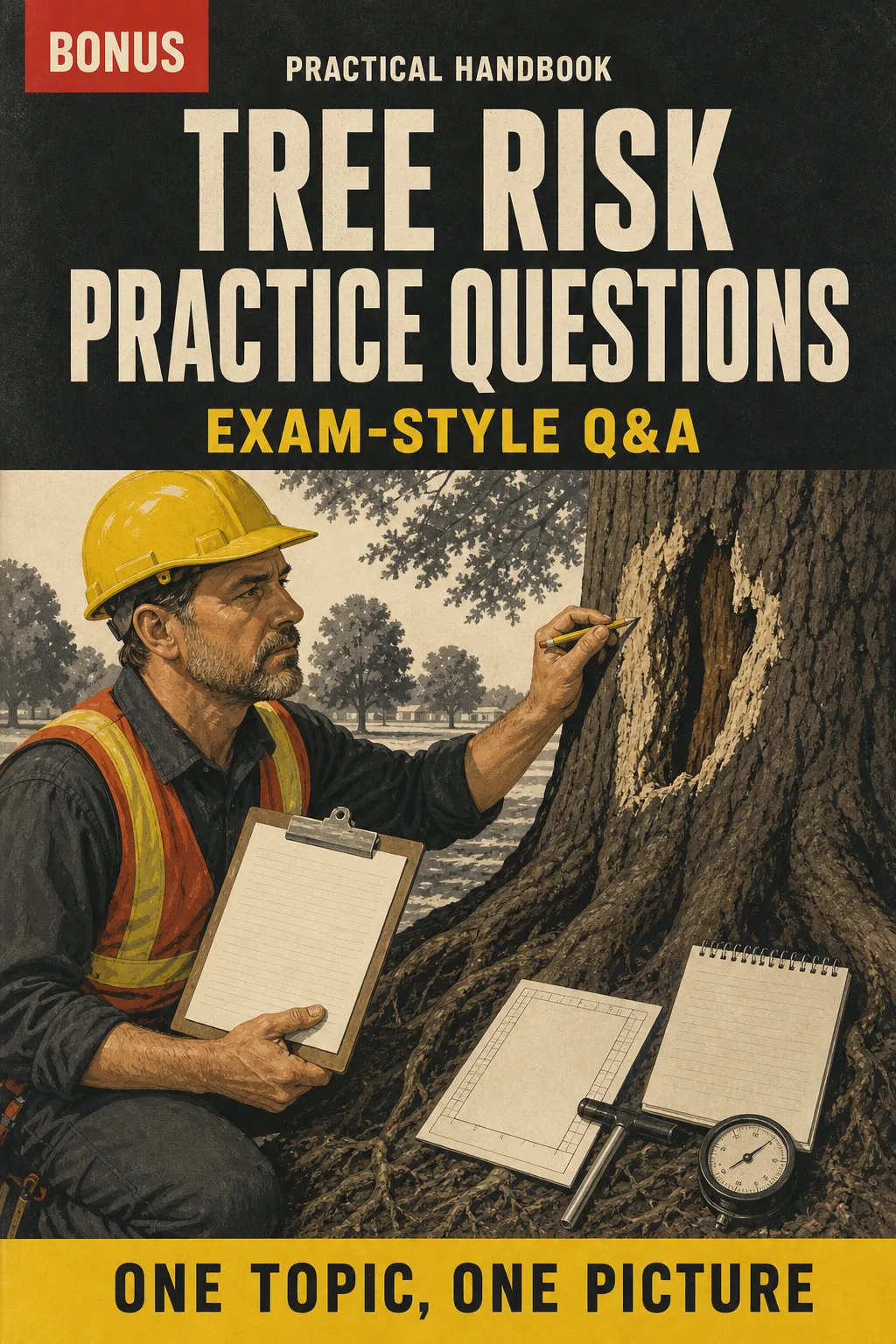
Tree Risk Practice Questions: Exam-Style Q&A

BONUS 1: «Tree Risk Practice Questions: Exam-Style Q&A»

Value on its own: US$ 17.90

Test yourself on levels of assessment, defects, ratings and the matrix, with the answer and the reason right below each question.

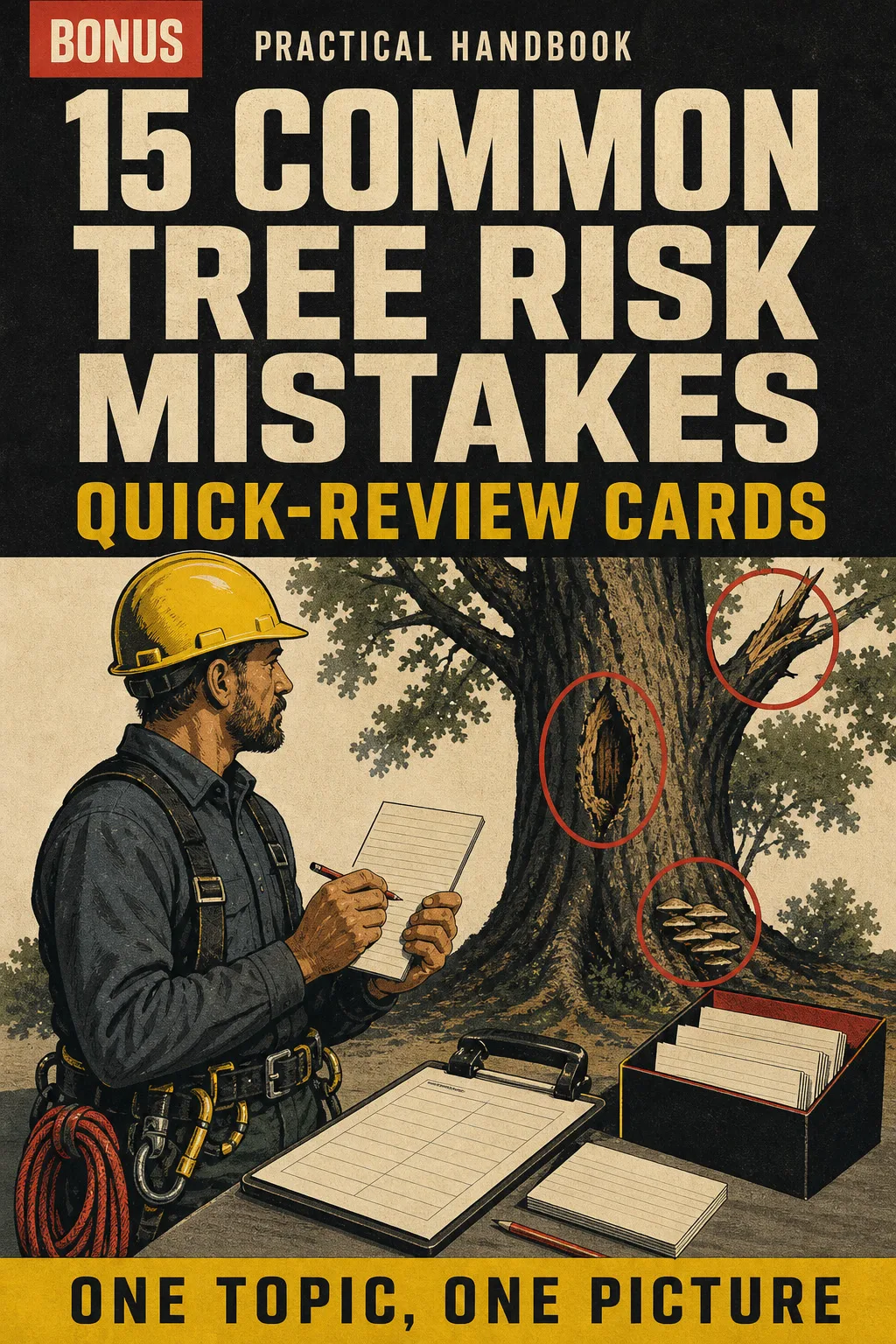
15 Common Tree Risk Mistakes: Quick-Review Cards

BONUS 2: «15 Common Tree Risk Mistakes: Quick-Review Cards»

Value on its own: US$ 14.90

The most frequent errors in rating, wording and mitigation, each one drawn before and after so you can review them at a glance.

Tree Risk Assessment Illustrated with 2 Free Books

  • Tree Risk Assessment Illustrated: 65 illustrated pagesUS$ 63
  • BONUS 1: Tree Risk Practice Questions: Exam-Style Q&AUS$ 17.90
  • BONUS 2: 15 Common Tree Risk Mistakes: Quick-Review CardsUS$ 14.90
  • High-resolution PDF to printIncluded
Total value US$ 95.80
YOUR PRICE:
US$ 27
You save US$ 68.80
YES, I WANT TREE RISK ASSESSMENT ILLUSTRATED FOR US$ 27

📄 This is a digital PDF book sent to your email: nothing is printed or shipped.

Secure purchaseEncrypted payment30-day guarantee

PDF by email: We email you Tree Risk Assessment Illustrated as a PDF, together with the two free books. It's a single payment: no installments, no extra charges.

Who This Book Is For

You're taking the tree risk course

You're taking the tree risk course

Every topic of the course on its own page, in the same nine-step order, so the manual finally has a map.

Your field exam is coming up

Your field exam is coming up

The matrix, the likelihood terms and the walk-around drawn step by step, plus the field exam walk-through to review the week before.

You already rate trees for clients

You already rate trees for clients

A fixed order and the right words to write the report and explain the rating to the homeowner, the city or the utility.

Everything You Get Today

US$ 95.80US$ 27
YES, I WANT TREE RISK ASSESSMENT ILLUSTRATED FOR US$ 27

📄 This is a digital PDF book sent to your email: nothing is printed or shipped.

30DAYS
GUARANTEE

30-Day Guarantee

Try Tree Risk Assessment Illustrated for 30 days, bonus books included.

We refund everything if the file won't open, if the book isn't what you see here, if you were charged twice or if the email doesn't arrive. Just email us.

You pay once. No subscriptions.

Frequently Asked Questions

Is it for me if I've been climbing and cutting trees for years?

Yes, and it's not a beginner book. It doesn't teach you to look at a tree: it gives you the order and the rating words to go from what you see to a rating and a written report. Keep your course manual: this is the map that puts each topic on one drawn page, in the same nine-step order.

Where does the content come from?

It's checked against ANSI A300 Part 9 and the current tree risk assessment Best Management Practices, the guidance used in the U.S. qualification course. Drawings, tables and wording are our own.

Is this official material?

No. It's an independent study book. It is not affiliated with, endorsed by or approved by ISA or ANSI.

Does it replace the course?

No. It's a study and review companion. It doesn't give you the qualification, a certificate or CEUs, and it doesn't replace the qualification course, field training or your professional judgment on site.

Are the practice questions the exam questions?

No. They're written for this book to help you practice levels, defects, ratings and the matrix. They are not official exam questions.

When and how do I get it?

As a PDF by email, at the address you enter at checkout. The 2 bonus books come the same way.

Do I have to pay every month?

No. It's a one-time payment.

Can I have it on paper?

Yes. The PDF prints on standard letter paper, so you can keep the pages you need in your truck.

How does the refund work?

You have 30 days. We refund everything if the file won't open, if the book isn't what you see on this page, if you were charged twice or if the email doesn't arrive: just email us.

Before You Close This Page

No more rereading the manual with nothing sticking.

The target zone, CODIT and the risk matrix: you see them drawn, and that's it.

You walk into the course and the field exam knowing where everything is.

Drawings make studying faster.

The book is right below.

One-time payment: US$ 27 · Guarantee: 30 days · PDF by email

YES, I WANT TREE RISK ASSESSMENT ILLUSTRATED FOR US$ 27

📄 This is a digital PDF book sent to your email: nothing is printed or shipped.